It is a strange kind of disappointment. You bought the purifier to remove odors, and now the corner of the room smells like a wet towel, a scorched plug, or a plastic wrapper. Here is the short answer before the details: the machine is rarely broken when the smell starts. In most cases the source is a filter that has reached the end of its working life, moisture that has turned the media into a home for mold and bacteria, or a brand new unit releasing volatile compounds from plastics and adhesives. Burning and ozone smells are the exception. Those two mean stop using the unit until you find the cause.
Content
Smell is a surprisingly precise diagnostic tool. Before you order a replacement filter, note what the air actually smells like and where it is strongest: at the outlet grille, at the intake, or near the motor housing. The table below maps the usual complaints to the checks worth doing first.
| What you smell | Most likely cause | Check this first | Action |
|---|---|---|---|
| Musty, damp, wet dog | Mold or bacteria growing on the media or inside the housing | Look for grey or black patches and feel the media for damp | Dry or replace the filter, clean the chamber, keep the room below 60 percent humidity |
| Sour, stale, chemical | Activated carbon saturated with formaldehyde, VOCs or cooking odors | Count months of running time and note any painting or new furniture | Replace the carbon stage; a full bed can release what it captured |
| Plastic or glue | Off gassing from new plastics, adhesives and sealing foam | Confirm that the unit or filter is new | Run it in a ventilated room for 24 to 72 hours |
| Hot, dusty, burning | Dust baking on a warm surface, or an electrical fault | Switch off, then smell the outlet and the motor area | Unplug the unit and have it inspected before reuse |
| Sharp, like a thunderstorm | Ozone from an ionizer, plasma stage or UV lamp | Check whether the ionizer can be switched off | Turn it off and ventilate; never run ozone generators in occupied rooms |
Read that table from left to right and you usually have an answer within twenty minutes. Read it the other way and a pattern appears: four of the five problems live in the filter and the air path, and only one belongs to the electronics.
If the odor appeared the same day you unboxed the unit, the cause is almost certainly off gassing. Plastics, adhesives, foam seals and the carbon itself release small amounts of volatile organic compounds when they are new, and the purifier then blows that air straight into the room. This is temporary behavior, not a defect.
Two details separate normal off gassing from a problem worth a complaint. First, timing: most units settle within 24 to 72 hours of running, while an obvious odor after two weeks of daily use points to a material or filter storage issue. Second, intensity: a faint warm plastic note that fades by lunchtime is normal, while an odor that stings the eyes or returns every time the fan speeds up is not.
After a few months of service the story changes. Activated carbon works by trapping gas molecules on a very large internal surface, and that surface has a finite capacity. Once the bed is full, the balance reverses during warm or humid spells and the filter starts releasing the sour, stale odor it previously removed.
How quickly that happens is not luck. A thin carbon cloth layer of a few grams is exhausted in weeks in a kitchen or a freshly painted room, while a granular bed of several hundred grams lasts far longer. This is one of the specifications worth asking about when you compare units, and if the carbon weight is missing from the spec sheet, treat the replacement interval as short.
Moisture is the second half of the problem, and it explains why the same purifier smells fine in winter and musty in a rainy season. Media that stays damp for hours grows microorganisms, and once a filter carries a microbial load, cleaning will not bring it back. Reduce room humidity, dry the accessible parts, and replace the filter rather than trying to save it.
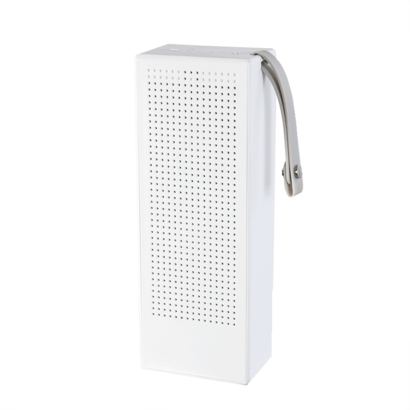
A purifier built around a serviceable filter stack, with a washable pre-filter and a carbon stage you can swap on its own, is far easier to keep fresh over years of use than a sealed cartridge design.
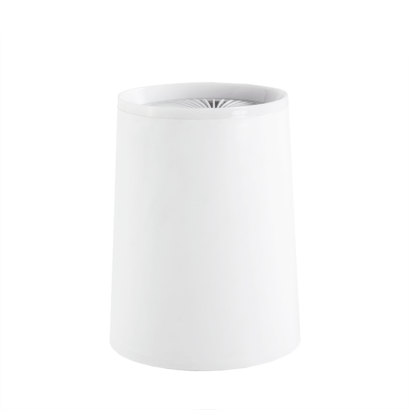
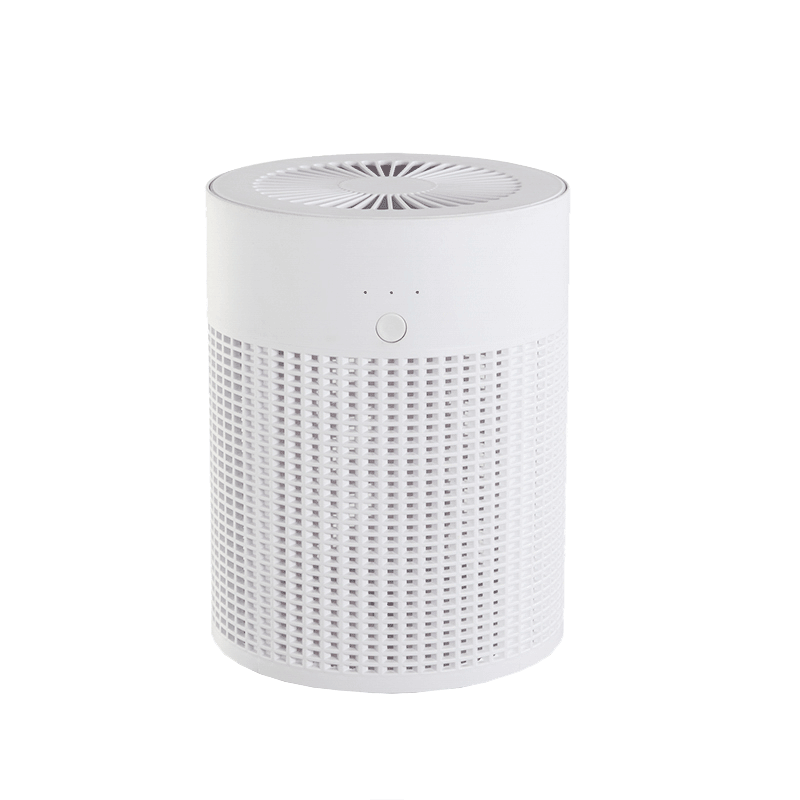 Portable Mini Air Purifier AP-01ACixi Xiatian Electrical Appliances CO.,LTD was founded in 2011, professional manufacturer and supplier of Portable Mini Air Purifier AP-01A. Workshop is 30,000 square ...View Product →
Two odors deserve a different response. A hot, dusty or electrical burning smell usually means dust is baking on a warm surface, or that something in the power path is failing. If the smell comes with a warm housing, a clicking sound or a metallic taste in the air, unplug the unit immediately. Cleaning the pre-filter and the intake grille solves the dusty version, while an electrical fault needs a technician, not a new filter.
A sharp, clean, thunderstorm-like smell is ozone. Some purifiers produce it deliberately and others generate it as a by-product of a corona discharge or UV stage. Ozone is a respiratory irritant, so a unit that produces a noticeable ozone smell in normal operation is not doing you a favor, even if the room smells fresh afterwards. If the ionizer can be switched off independently, do that. If it cannot, ventilate while it runs or stop using that mode.
Repeat the pre-filter check every two to four weeks and the carbon replacement every three to six months, sooner in a kitchen, a workshop or a home with pets. The operating rhythm matters more than the price tag, and a short guide to how a purifier is normally operated is a useful cross-check if your own routine has drifted.
When you choose a purifier, or specify one for a product line, the smell question is answered on the spec sheet rather than in the marketing copy. Five items cover most of the risk.
For a compact bedroom where a full tower is overkill, a mini unit with a washable pre-filter and a simple replaceable pad is easier to keep fresh than a sealed design.
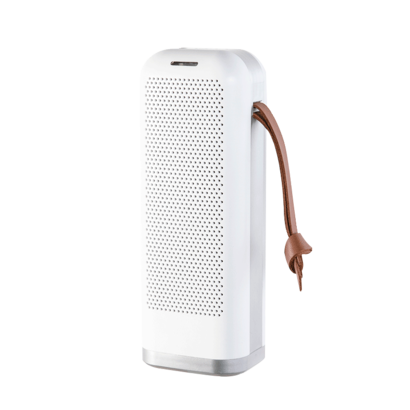
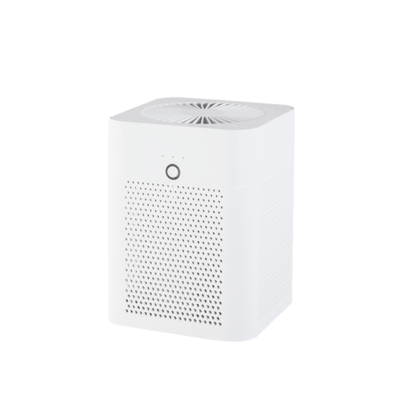
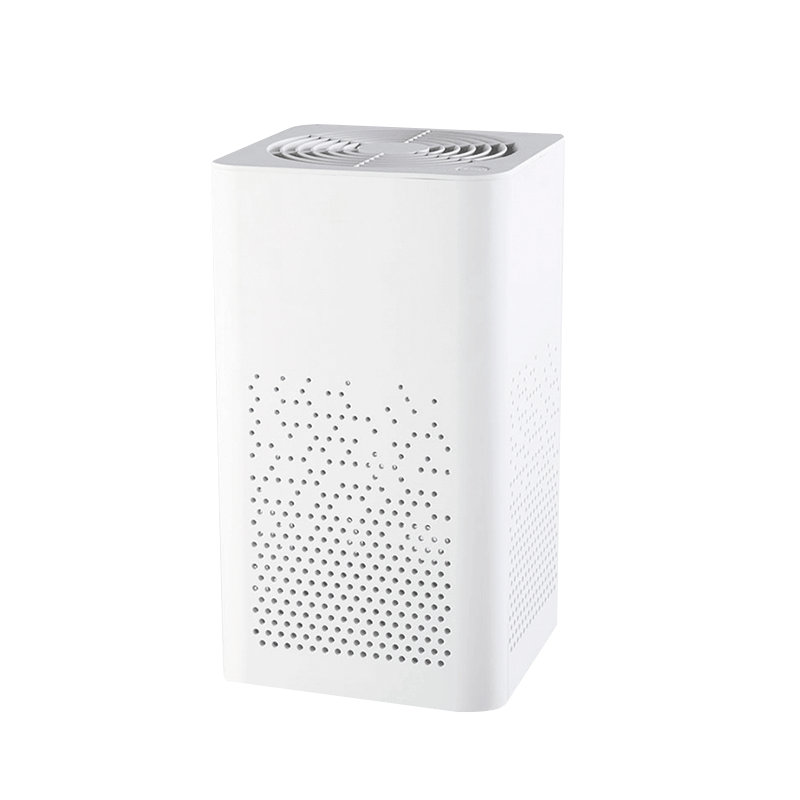 Home Air purifier MAP-01Particular Matter CADRView Product →
In a small apartment where the unit has to move between rooms, a rechargeable model removes the temptation to leave it in one damp corner all year, which is one of the fastest routes to a musty filter.
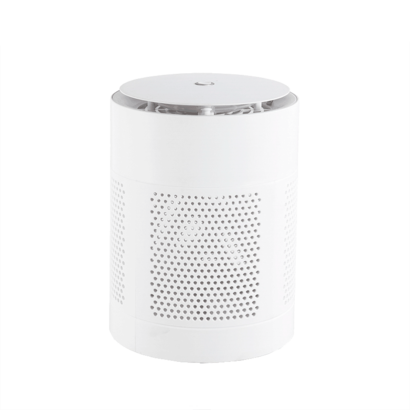
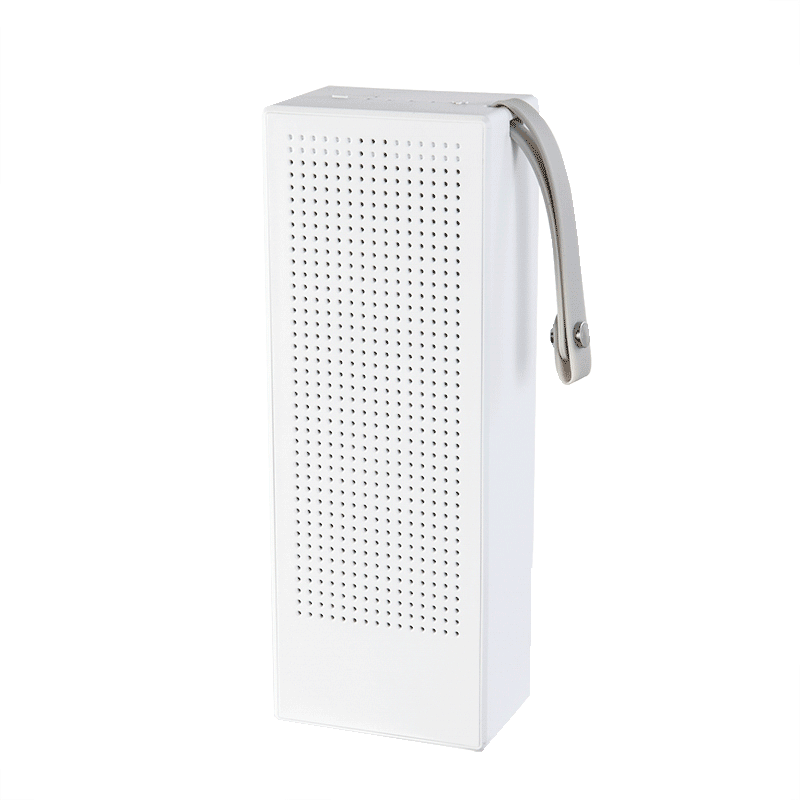 Portable Rechargeable Air Purifier RAP-02Particular Matter CADRView Product →
Buyers sourcing purifiers in volume have one extra lever: the filter stack itself can be specified. A manufacturing partner that moulds its own housings, runs an in-house test lab and can develop to a drawing or a sample has more room to solve a persistent odor complaint at the design stage than a supplier reselling a fixed platform. Brands working through that question are welcome to discuss the requirements with our team.
A bad smell from an air purifier is a maintenance message far more often than a fault report. Match the odor to its cause, replace the carbon once it is full, keep the media dry, and stop running the machine if the smell is hot or sharp. Do those four things and the unit goes back to being the appliance that removes odors rather than the one that creates them.

@2020. CIXI XIATIAN ELECTRICAL APPLIANCES CO. , LTD. Alla rättigheter förbehållna. Partihandel High-End elektriska fläktar Tillverkare



 engelsk
 한국어
한국어